
In most Bibles, the Old and New Testaments are separated by a blank page. But that single page represents a long interval known as the 400 years of silence, because we have no record of God speaking through the prophets or inspired writers.
Nevertheless, God was at work orchestrating world affairs to bring about the fullness of time, His planned redemption of mankind.
But when the fullness of time had come, God sent forth his Son, born of woman, born under the law, to redeem those who were under the law, so that we might receive adoption as sons.
Galatians 4:4-5
In the Old Testament, God had allowed the Assyrians and Babylonians to take the Israelites into exile because of their disobedient worship of false gods. By the time of Malachi, a remnant of the Jews had returned to Israel, then under the rule of the great Medo-Persian Empire.
Israel had ceased to be an independent nation, the annexed territory of a succession of larger empires. A puppet state with no king of its own, but allowed to practice its religion.
But the exile had left its mark on the Jews and their religion. Despite repeated warnings from the prophets, they made a formal pretense of serving God, but inwardly blasphemed His name while living in disobedience.
Such is the atmosphere at the end of of the Old Testament (around 430 BC), which concludes with both a warning and the prophecy often considered the capstone prophecy of the Old Testament.
Behold, I will send you Elijah the prophet before the great and awesome day of the Lord comes. And he will turn the hearts of fathers to their children and the hearts of children to their fathers, lest I come and strike the land with a decree of utter destruction.”
Malachi 4:5-6
The Intertestamental Period
This ushered in the beginning of the intertestamental period, a dark and silent era in the history of Israel from the time of Malachi to the coming of John the Baptist. It encompasses the age of Hellenistic Judaism.
During this time of silence, God prepared the way for Christianity through the rise of three great world powers: the Persians, the Greeks, and the Romans.
This gradually shifted the center of world power westward which was a crucial in setting the stage for the coming of Christ. During this epoch each of the subsequent six epochs played an important role.
The 400 years of silence between the Bible’s two testaments is important because God was orchestrating world affairs to bring about the redemption of mankind.
Signora Sheila
The Persian era
Under Persia (539-332 BC), Israel was largely self-governing and was allowed to rebuild the Temple and restore the sacrificial system. Both of which were vital to preserving the Jewish religion and keeping alive the promise of the coming Messiah. This span of time included the last 100 years of the Old Testament period and about the first 100 years of the intertestamental period. It was a time of relative peace and contentment that was just the calm before the storm.
The Greek era
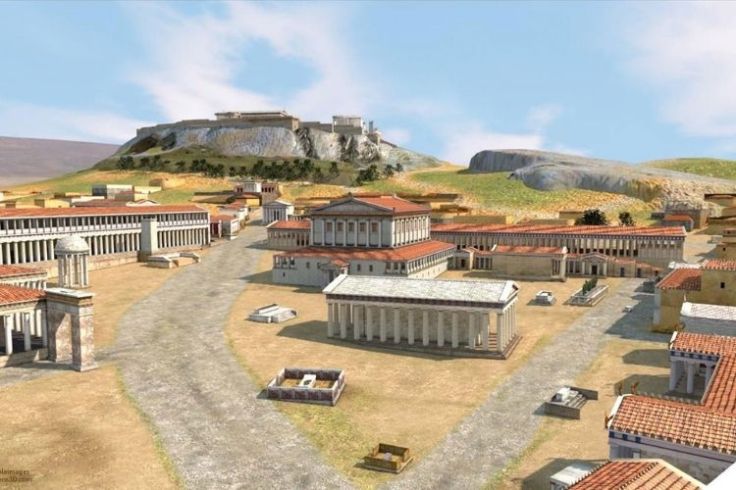
Alexander the Great defeated Darius of Persia and established Greek rule which had a lasting and important influence on the world. Alexander pushed for the Hellenization of the world: a worldwide empire united by Greek customs, culture and language.
Ironically, it was Alexander’s death that brought his plan to fruition, as the empire split into four dynasties that spread far and wide. This made Greek the common language which paved the way for the translation of the Old Testament into the Greek Septuagint version.
The Jews were allowed religious freedom under Alexander, but unfortunately Judaism was heavily influenced by Greek culture, which was very worldly, humanistic, and ungodly.
The Ptolemaic dynasty
After Alexander’s death, his empire was divided among his generals. Two of them founded dynasties — the Ptolemies in Egypt and the Seleucids in Syria and Mesopotamia. They would contend for control of the Judea for more than a century.
The Ptolemaic dynasty, a Greek state centered in Egypt, was very tolerant of Judaism and facilitated the translation of the Old Testament Scriptures into Greek. This version of the Old Testament (the Septuagint) became widespread and carried the promise of God’s soon-coming Messiah throughout the world. This was perhaps the single greatest development in preparing the world for the coming of Christ.
The Seleucid dynasty
When the Syrian-based Seleucid dynasty (198-165 BC) came to power, Israel entered a period of almost continuous martyrdom. The Seleucid king, Antiochus Epiphanes, was determined to eradicate the Jewish religion. He forced the Jews to adopt Greek culture, religion, and language. He even sold the priesthood, and desecrated the Holy of Holies.
But the more the Jews were denied worship and separated from the Temple, the more important their Old Testament scriptures and synagogues became to them. The synagogues, located throughout the Greek world, became the great missionary vessel for spreading Israel’s messianic hope everywhere.
The Maccabean era
The reign of Antiochus Epiphanes is one of the most prominent examples of religious intolerance in the ancient world. It was his decree banning the traditional religious practices of the Jews that led to the Maccabean revolt led by Judas Maccabeus. This resulted in Jewish independence which is celebrated with the eight-day festival of dedication known as Hanukkah.
The Maccabean era (165-163 BC) was important because it brought about a renewal of Jewish nationalism and renewed hope for the arrival of the coming Messiah.
The Roman era (66-63 BC)
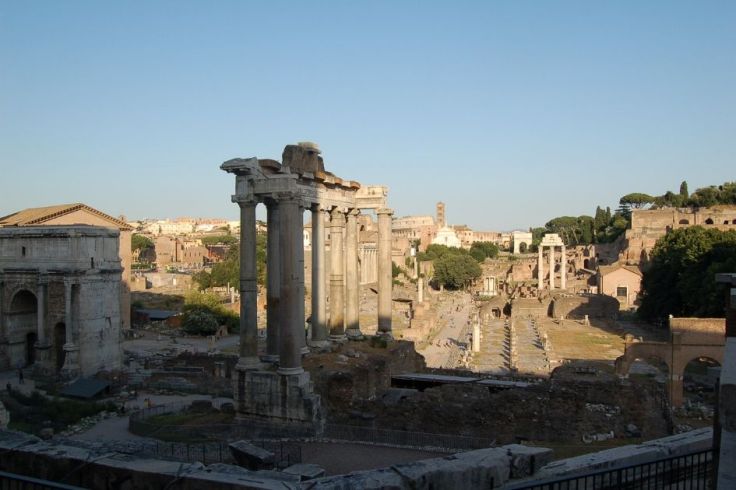
The Romans gained control of Israel in 63 BC when Pompey entered the Holy of Holies. This extremely sacrilegious act alienated every loyal Jewish heart from Rome and created a burning desire for the coming of the Messiah.
This is when John the Baptist entered the scene. His announcement of the imminent arrival of the Messiah brought an end to 400 years of silence.
Rome, by establishing peace, economic stability, and building roads throughout the empire, made the spread of Christianity much easier.
Lessons from the 400 silent years
What can we learn from the 400 years of silence?
First, that God is never completely silent and is always at work. Even when everything seems dark. But more importantly, that He is sovereign and in control of world affairs.
And second, if He can move and position great nations and kingdoms to do His will, then He can also orchestrate the affairs of our humble lives. He is a great God, and in that we can rest.
And the word of the Lord was spreading throughout the whole region.
Acts 13:49
Resources:
The Intertestamental Period and its Significance Upon Christianity
Between The Testaments
Images: Crown | New Testament | Greece by Dimitris Tsalkanis from FreeBibleImages.org | Rome is mine.
 Signora Sheila
11 responses to “Significance of the Intertestamental Period”
I love this history. I have not covered this material since I was in college.
LikeLike
Thank you Matthew. I had never really done an indepth study of it before. What I discovered is that there is vast info regarding it. The post would have become thousands of words. So I finally narrowed it down to a few essentials. I may post more on it again, but need to break it down into bits and pieces! Bible study really is an endless adventure! God bless, Sheila
LikeLiked by 1 person
This was extremely informative, and I greatly enjoyed reading it. Thank you :)
LikeLike
Thank you TR. It is amazing how God orchestrates things, isn’t it?!! Be blessed.
LikeLiked by 1 person
Yes :)
LikeLiked by 1 person
Israel is an amazing place!! I wish Israel today looked like the picture you have posted!!!
LikeLike
Yes, it would be great if Israel could still look that peaceful. But all war will come to end! Be blessed, Sheila
LikeLiked by 1 person
This is excellent Sheila, I think I will repost it! Blessings!
LikeLike
Thanks Bruce. I love what God does, even through his silence!! Be blessed, Sheila
LikeLiked by 1 person
Great synopsis and reminder God works in ways we don’t typically expect, but always for the purpose of preparing our hearts to receive Jesus.
LikeLike
So true Vanessa! God does so many amazing things an in ways we could never dream of! Be blessed, Sheila
LikeLiked by 1 person