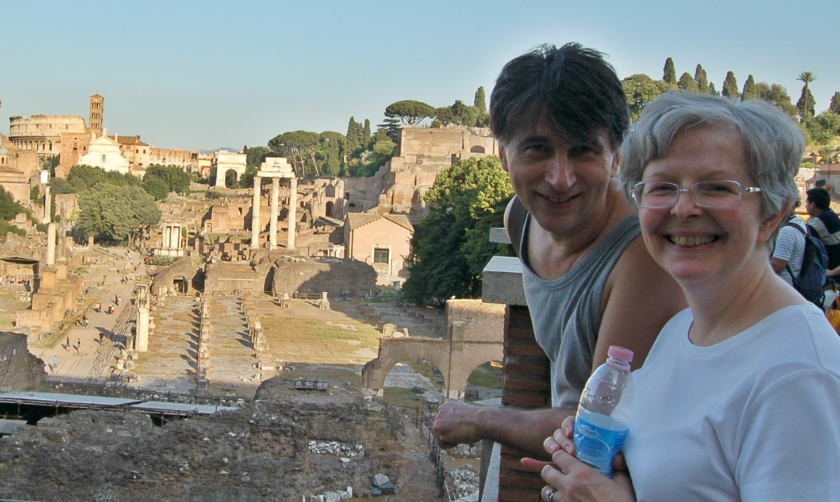
Oh no, a boring list of museums? No, not at all! Because it also includes interesting facts so that you can discover what makes these five museums (out of more than 3,000 in Italy) unique! For example, did you know that the man who made one of these museums famous never wanted to do the job?
Top 5 Museums: My Picks
1. The Vatican Museums
The most visited of the museums, they are a veritable treasure trove for works of art, especially Michelangelo’s Sistine Chapel. Don’t visit Rome without seeing the chapel!
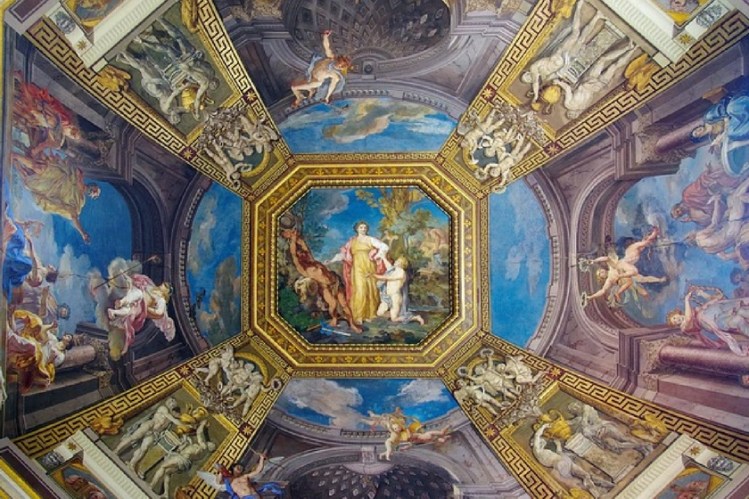
Many consider the painting of the Last Judgement on the chapel’s cieling to be both the museum’s finest exhibit and Michelangelo’s greatest achievement.
But did you know that Michelangelo never wanted the job of painting the frescoes? He considered himself a sculptor not a painter! Wow, not bad for a non-painter! Wouldn’t you agree?
Another interesting fact: Contrary to popular belief, Michelangelo did not paint the ceiling frescoes while lying down, but standing on special scaffolding. What a stiff neck it must have given him! In fact, when describing the work, he said it gave him a goiter, squeezed his stomach under his chin, and knotted his spine. It seems he didn’t enjoy the work!
And the chapel has another important aspect too: the chimney is used to inform the world when a new pope has been elected.
Since 1492, papal elections have been held in the chapel by secret ballot, with the outside world eagerly awaiting the results. Once the election is over, special substances are added to the chimney to produce white smoke as a signal that a new Pope is at the helm of the catholic Church.
Imagine to find yourself visiting the Vatican during one of these historic moments!
2. The Uffizi Galleria in Florence
The Uffizi Gallery is one of the oldest, largest, and most famous museums in the world, and one of the most visited in Italy. It houses an immense collection of priceless works of art, particularly from the period of the Italian Renaissance.
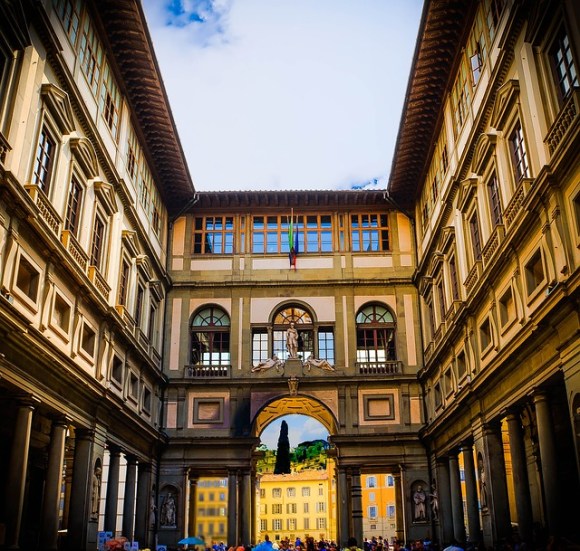
Originally designed in 1560 to house the offices of the ruling de Medici family and Florentine judges. The term uffizi actually means offices. But over time it became a place to display the family’s many paintings and sculptures. A collection that became so large that they had to move many pieces to other museums!
But one of the most distinctive features of the building is its long interior courtyard, which architectural historians define as the first regularized streetscape in Europe.
The term streetscape refers to the way in which buildings, gardens, paths, and streets work together to create the visual identity of a street or neighborhood. A well-designed streetscape creates an inviting appearance that encourages people to visit or live in the neighborhood. And it usually increases market demand and real estate prices.
The long and narrow courtyard of the Uffizi is open at the ends. This allows people to enjoy a picturesque view of the Arno River through Doric columns that define the space without blocking it. So that the beautiful courtyard, with its majestic columns and cornices, can also be admired from the outside.
3. The Accademia Galleries in Venice
The Venice Art Galleries contain many famous paintings and the largest collection of Venetian art from the early 18th century, when Venice was a thriving community of artists. They are a must for all lovers of paintings!
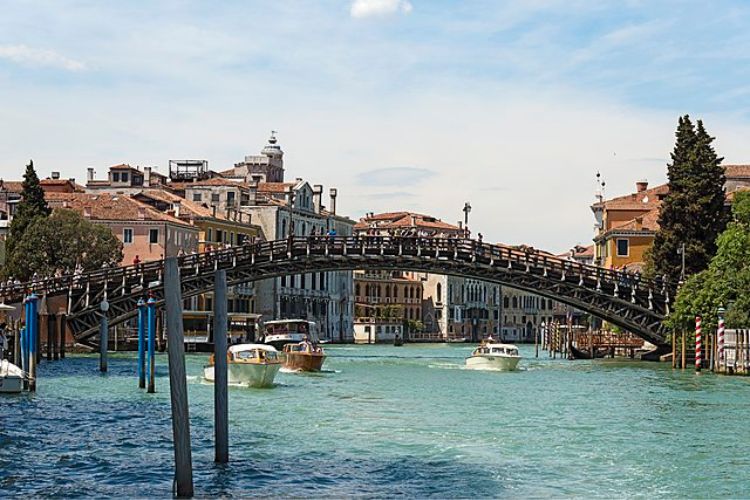
The Galleries are housed in the complex of the former Church of Santa Maria della Carità, which also included a convent and a school. It is located on the south bank of the Grand Canal near the Ponte (bridge) dell’Accademia (above).
They were originally a part of the Royal Academy of Fine Arts, one of the first art schools to study art restoration. They shared the building until the school was moved to the former Hospital of the Incurables, and the museum took over the entire complex.
An interesting fact about the museum is that it contains a large collection of drawings by Leonardo Da Vinci, although he is not normally associated with Venice. The drawings by this great Florentine artist, including his Vitruvian Man, were donated to the museum by the Austrian government, which had purchased them from a Milanese cardinal.
A little-known curiosity about Da Vince is that he once took refuge in Venice for several months after his friend and patron Ludovico Sforza was overthrown by Louis XII of France in 1499.
4. The National Archeological Museum of Naples
The National Archaeological Museum of Naples contains a large collection of artifacts from the Greek and Roman periods, as well as from the Renaissance period. But it is particularly important for ancient Roman artifacts and remains.
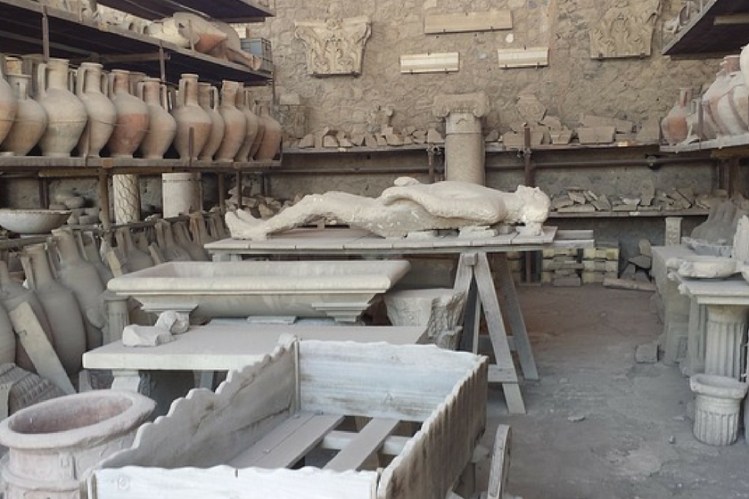
Originally built as a Calvary barracks, the building houses so many Greek and Roman antiquities that it’s nearly impossible to list them all! These include rare artifacts from Pompeii and a cork model of the city before it was destroyed by the eruption of Mount Vesuvius in 79 AD.
The museum also has an Egyptian collection which children will especially enjoy because of the gruesome mummies. It is the second largest collection of Egyptian artifacts in Italy. (Only the Egyptian Museum in Turin has more).
But the museum’s most unusual (and problematic) collection is in the Secret Cabinet. This is the collection of erotic objects from the excavations of Pompeii and Herculaneum, which at various times in history have been locked away and even walled up.
Unfortunately, (in my opinion) it was opened to the public in April 2000. However parents need not worry. Visitors under the age of 14 must be accompanied by an adult.
5. Santa Maria della Scala in Siena
Santa Maria della Scala is one of the most interesting museums in Italy because of it’s original history. The building was once one of the first hospitals in Europe!
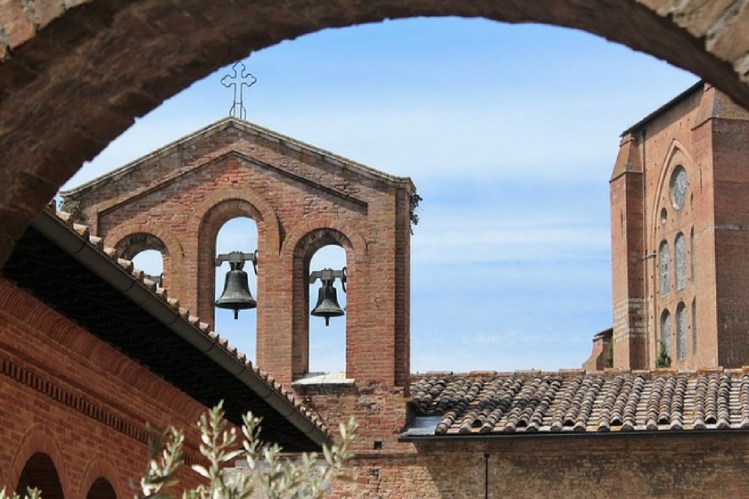
In fact, local residents still call the museum “The Hospital.” This charitable organization, one of the largest hospitals in Europe at the time, cared for abandoned children, the poor, the sick and pilgrims.
And it seems that not only the building survived. For the compassionate spirit of the hospital lives on – children and people with disabilities are admitted free of charge!
And isn’t that the purpose of museums: to make history come alive for us? History has much to teach us, and museums are a great way to learn! What have you learned from them?
📷 Image credits: us in Rome by Maurizio; Vatican museum; Uffizi museums; Accademia bridge of the Accademia by Didier Descouens; Naples archeological museum; Santa Maria della Scala
 Signora Sheila
6 responses to “Italy’s Five Best or Most Unusual Museums”
The one that stood out most for me was in San Gimignano Sra. Sheila. So many artifacts of the saints, there.
LikeLike
I haven’t been to that one. But I love the San Gimignano area. It’s so beautiful! And actually the museums full of religious artifacts are not my cup of tea! But that’s OK, with more than 3000 museums, it still leaves me with plenty of choice!
LikeLike
Over 3,000 museums in Italy? That’s insane. But what beautiful places to remind us of the richness of our history through the beauty of art. Thanks for sharing these, my friend. One day I will get to Italy and see all these for myself.
LikeLike
I know – more than 3000 museums is crazy! But then, Italy has a long, rich history. I do hope you will make it over here to visit our beautiful nation and interesting places!
LikeLiked by 1 person
I too love museums, Sheila. Thank you for giving us a tour of your favorites there in Italy!
LikeLike
Yes, my friend. Museums are great! Informative, fun, and we learn so much about people, times and places. I’m glad you enjoyed the mini tour!
LikeLiked by 1 person