
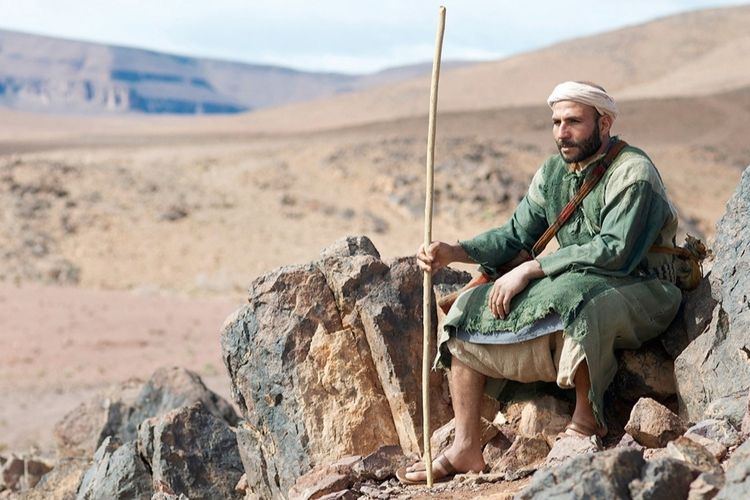
Shepherding is one of the oldest human occupations, second only to gardening and farming. It played a crucial role in biblical times. Sheep were central to the economy and religious life of Israel. And the contribution shepherds made, though invaluable, was often overlooked or undervalued.
Abel was the first in the Bible to keep sheep. But the first mention of a nomadic herdsman came later in Genesis chapter 4 with Jabal: the father of those who live in tents and have livestock. After that, nomadic herding quickly became a common occupation.
Abraham, Isaac, Jacob, and all the early Patriarchs were nomadic shepherds and herdsmen whose livelihood depended on their flocks and herds.
Sheep were important
As the Israelites became more settled after their exodus from Egypt, they turned more to agriculture and craftsmanship, becoming carpenters, potters, coppersmiths, tent-makers, and fishermen.
And because these newer occupations required stronger backs or greater skill, the care of sheep and livestock was often left to the women, children, or servants.
The men who remained primarily shepherds belonged to the lower classes, both financially and socially – even though sheep were such an important part of Israel’s economy, regular diet, and religious life.
Less educated and often with rough manners, acquired from long hours alone in the wilderness, shepherds were often looked down upon by others.
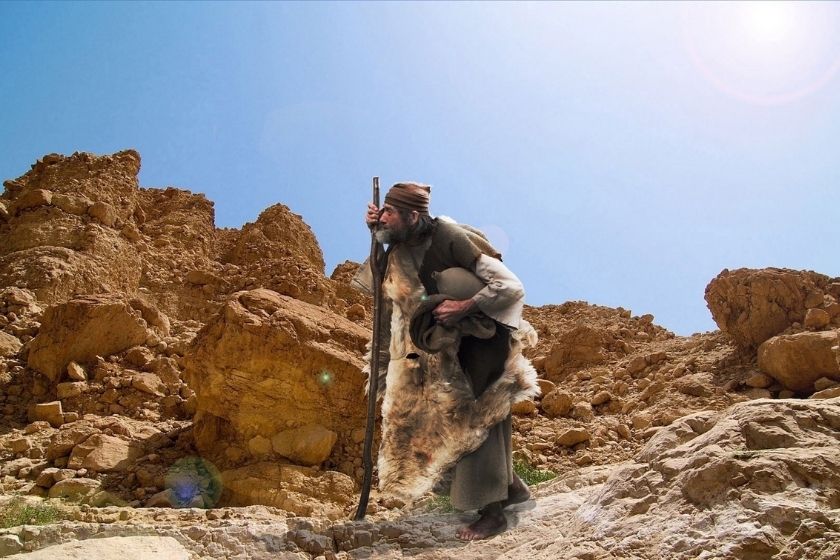
Life of a Shepherd
The life of a sheperd was not easy. They spent most of their time outdoors, watching over the sheep and goats, and sleeping on the ground in all kinds of weather. And they often had to protect the animals from robbers or wild beasts with nothing more than their rod and staff, a sling, and their bare hands.
The Shepherd’s Tasks:
1. Feeding the sheep
During the rainy season (from November to March) when green pasture was plentiful, shepherds moved their flocks closer to the towns. After the grain had been harvested and the poor had gleaned their food, the flocks were also allowed to graze on the stubble and leftovers in the fields.
But during the dry season (April to October), the shepherds had to keep moving their flocks through the wildnerness in search of food. At first glance this might seem an impossible task in such a barren, brown wasteland. But knowing that there are always a few tufts of grass growing near rocks and streams, they lead the animals to them. And when necessary, they would lead them home and feed them hay and grain.
2. Watering the sheep
On the way, the shepherd also had to lead his sheep to water. Either to an existing well, or to the still waters of which Psalm 23 speaks, for noisy fast-moving water tended to agitate the nervous and easily-frightened sheep.
3. Protecting and caring for the sheep
Sheep are defenceless, so the shepherd had to protect them from predators and keep them from straying or getting into trouble. He also had to treat their wounds with olive oil carried in a ram’s horn. And he would wrap newborn, wounded or sick lambs and carry them close to his warm body to help them heal faster.
Sheep are defenceless, so the shepherd had to protect them from predators, and keep them from straying or walking into peril. He also had to treat their wounds with olive oil, carried in a ram’s horn. And he would wrap newborn, wounded, or sick lambs, carrying them close to his warm body to help them heal more quickly.
4. Making of sheepfolds
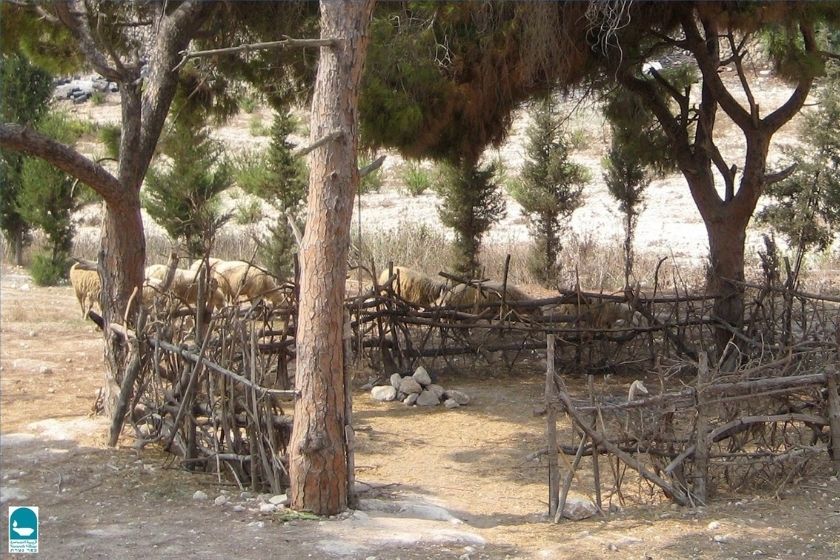
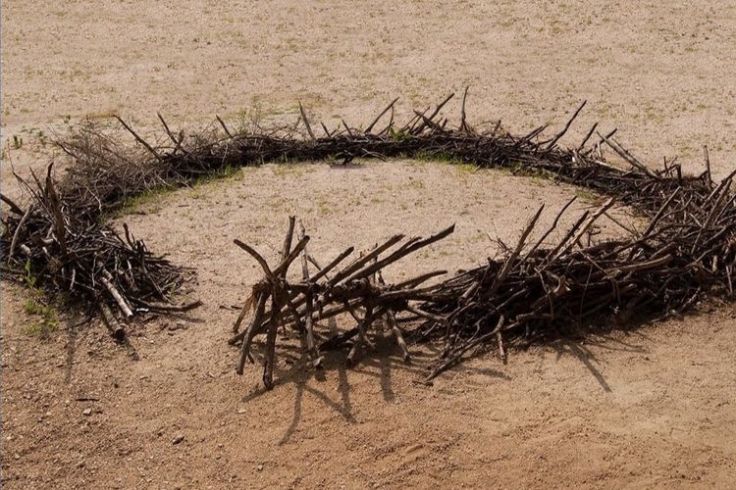
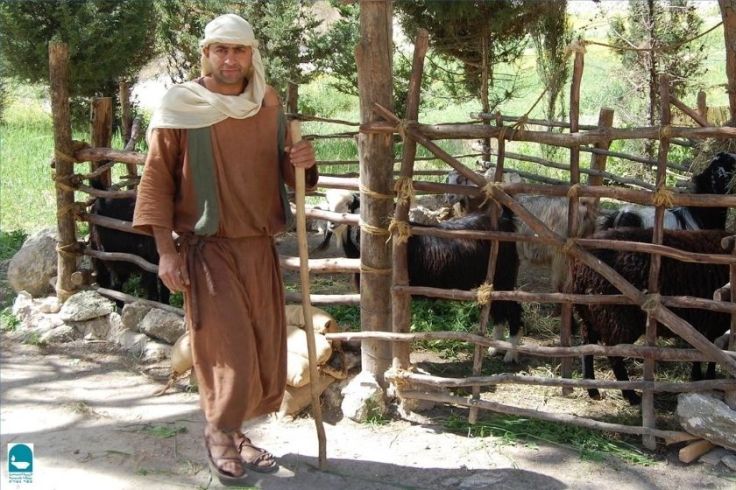
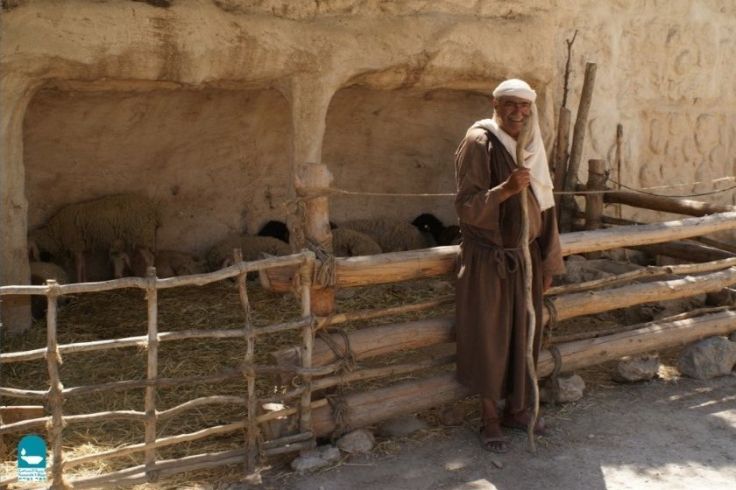
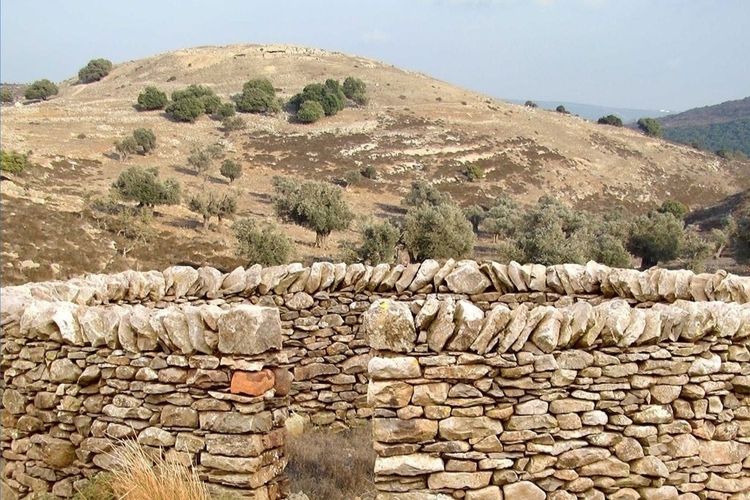
Shepherds kept numerous sheepfolds, or shelters. A permanent sheepfold would be made of stacked rocks or in a cave or under a cliff near the shepherd’s home. And along his routes through the wilderness, he would build them out of sticks. A quick, makeshift sheepfold could also be made of thorns.
The shepherd’s tools and gear
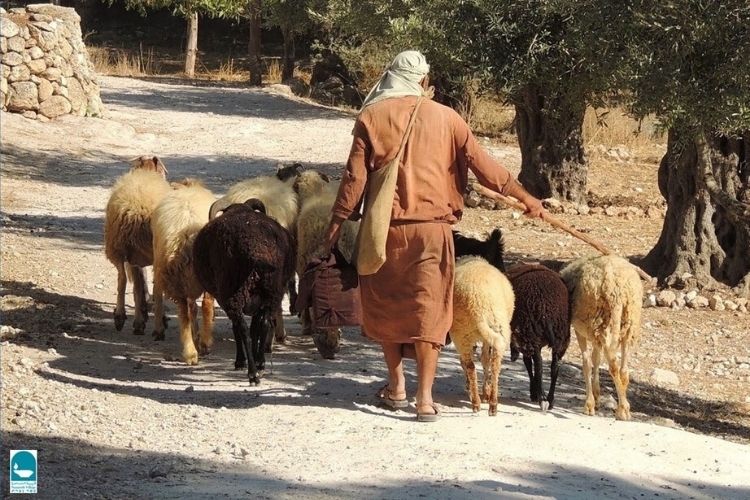
Always on the move and out in the open, the shepherd’s clothing had to protect him from head to toe, with sturdy leather sandals for his feet and a cloth turban to protect his head from the hot sun.
The rest of his garb was quite simple. A cotton tunic held in place by a leather girdle or belt tied around the waist. Plus an outer garment made of animal skins or a roomy, hooded, woollen cloak that could be used as a blanket. He could also wrap and carry a sick, injured, or newborn lamb in his cloak.
The shepherd’s rod
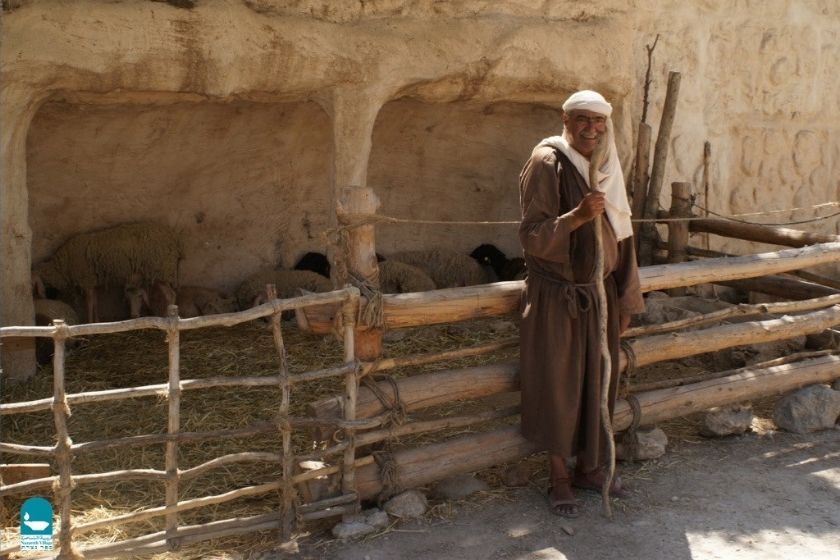
This long heavy stick, made of oak or other hardwood, was one of the shepherd’s most important tools. He used it to protect himself and the sheep, and to count the sheep each evening as they entered the sheepfold, and again in the morning when he took them out, and as a disciplinary tool on stubborn sheep.
The shepherd’s staff
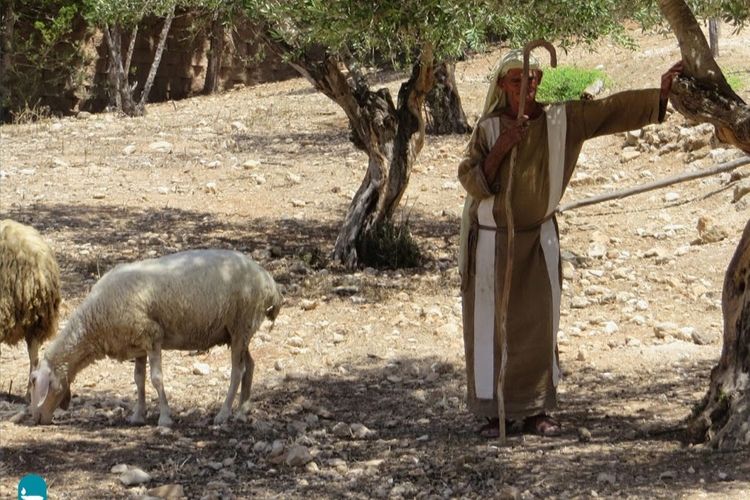
The staff is also known as the shepherd’s crook because of the crook it often had on one end. Primarily used as a walking stick, it was also useful in handling the sheep, rescuing one after it had fallen, or pulling a wayward sheep back onto the path.
The shepherd’s sling
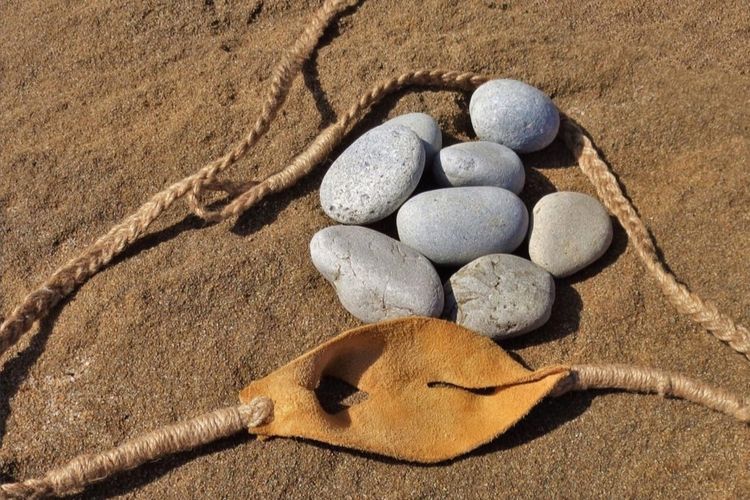
Made from a piece leather and tied with rope or leather thongs, the sling was another useful weapon of defense. It was also used by the shepherd to throw stones at lagging or straying sheep to keep them on the right path.
The shepherd’s bag, water pouch, and ram’s horn
A leather bag was also an important part of the shepherd’s gear for carrying food: cheese, bread, olives and dried fruit. He also used it to carry his flute and some stones to throw with his sling.
He also carried a small skin pouch for drinking water and a ram’s horn filled with olive oil for medicinal purposes.
At night or during rest periods, the shepherd would play his flute to calm the sheep and to keep himself company.
A hard and solitary life
The shepherd’s life was hard and often lonely. But in many ways it was also a rewarding one. He loved his sheep and had the satisfaction of knowing that they knew his voice and would follow him wherever he went. Often a few shepherds would keep their sheep in the same sheepfold. But when it was time to take them out, the sheep knew their own shepherd’s voice and followed him willingly.
May we also know the voice of our shepherd and readily follow wherever He leads.
My sheep hear my voice, and I know them, and they follow me. I give them eternal life, and they will never perish, and no one will snatch them out of my hand.
John 10:27-28
All images in this post by David Padfield from FreeBibleImages.org.


![Don't you Know You Are Beautiful? [Video]](https://signorasheila.blog/wp-content/uploads/2018/02/beautiful-woman-painting-1.jpg?w=750)
 Signora Sheila
10 responses to “A Shepherd’s Life in Bible Times”
Such great insight into a shepherd’s life. It makes so much of what they did and how they did it make sense. I could picture David sitting among his sheep, playing his flute, enjoying the calm of well-tended flocks. Thanks, Sheila!
LikeLike
Thanks Dayle! I love studying about life in Bible times. It brings richness and depth to the Bible stories! Like David and his flute!
LikeLike
I love studying life in Bible times, Dayle. It offers so much insight into the Scripture. And yes, when we think of shepherds – how could we not think of David and his flute!! Glad you enjoyed it!
LikeLike
Sheila, A beautiful post. Thank you for the reminder that our Good Shepherd lovingly leads us. Bless you. Karen
LikeLike
Thank you, Karen. The Good Shepherd is, indeed, some of the most beautiful imagery in Scripture. It displays so much of God’s love and care toward his sheep – even when we are wayward! Bless you, my friend.
LikeLiked by 1 person
Beautifully written and your scripture selection is on of my favorites. Because my husband was a pastor many years ago the Lord made me to know He would be my Shepherd. He fills me with peace. God bless you.
LikeLike
Thank you! John 10 on the shepherd is one of my favorites too. And yes, he is our faithful shepherd, who never leaves us. Blessings to you today!
LikeLiked by 1 person
Thank you for the blessing.
LikeLiked by 1 person
Love this! Thank you for sharing about shepherds. Very hard workers and dedicated to their sheep.
LikeLike
Thank you Mimi. Yes, they are very hard workers and their dedication is awesome. My husband chuckled when he read the part of shepherding getting turned over to the unskilled family members. It actually takes a lot of skill and knowledge to care for sheep! They are really fairly delicate animals.
LikeLiked by 1 person