

As we have learned earlier in this series, the occupations and tasks performed by men and women were many and varied. And we have also learned that because many occupations were a mixture of cottage industry and manufacturing on a larger scale, the home and field section tends to overlap with jobs in the marketplace.
This section covers the various occupations that were carried out in the marketplace. Most of them involved the sale of goods, which were made by craftsmen.
Marketplace Professions
The marketplace was the place where goods or services were sold or traded. In ancient Oriental society it consisted of two parts.
The bazaar, which was usually a covered portico, arcade, or walkway with rows of shops or stalls on each side. These shops were often divided into sections or even located in different parts of the city. For instance, the Bakers’ Street or the Fish Gate.
Markets, on the other hand, were not a continuous activity but were held when goods were available. After the harvest, for example. Or when caravans (often foreign) arrived with goods from far away. Markets were usually set up in front of the town’s shops and stores. Or in a plaza or open space near the city gates.

And the handicraft section where, for example, perfumes were made, or where you could get a haircut or legal documents.
But the marketplace was also a meeting place. A place where children played and people met to exchange views or to give speeches. The unemployed gathered there, hoping to be hired for the day. It also served as a kind of preliminary court (Acts 16:19), and even as an open-air hospital (Mark 6:56).
Craftsmen (in alphabetical order):
Apothecary:

Experts differ on whether the apothecary was a perfumer, a pharmacist, or both. But all agree that he made perfumes.
As a perfumer he made scented oils, ointments, spices, and incense, which were used to perfume people, clothing, beds, and couches, as well as for worship and burial.
His pharmacy duties included the preparation of medicines and ointments. Usually from herbs and other natural ingredients such as frankincense, myrrh, hyssop, garlic, fennel, and pomegranates, among others.
Basket makers:

Basket weaving was a recognized and useful craft among the Hebrews. Baskets were among some of the most versatile and common items found in the home. So much so that there are 10 different Greek and Hebrew words for baskets!
Various materials such as willow, rushes, twigs, palm leaves, and leather were coiled or woven into baskets of various types and sizes. Some had handles or lids, others had ropes attached to carry them like a backpack. Some woven baskets were almost waterproof.
Baskets were used for domestic and agricultural purposes, such as serving, gathering, and storing food and grain. They were also used to carry clothing, clay for making bricks, and even as cages for capturing birds and fish. Basket makers made mats, room dividers, and sandals.
Builders:
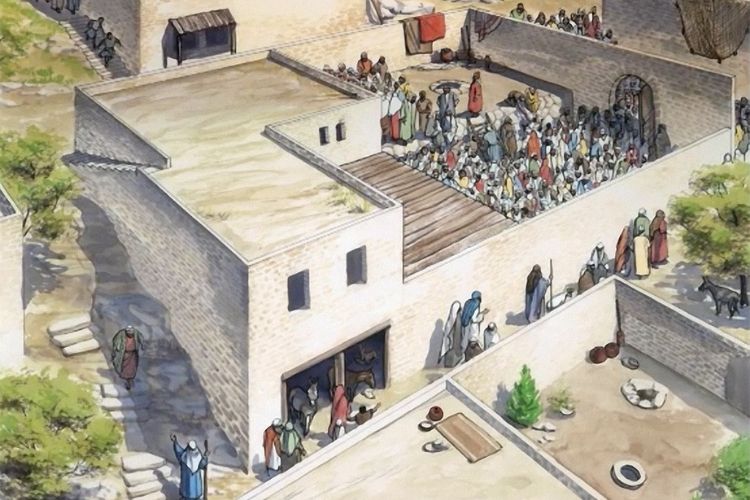
The building trade was an essential element of society. Since most houses, buildings, and city walls were made of stone and brick, these craftsmen were in high demand. The following is a list of the various steps involved in the construction process.
Carpenters near the sea were often involved in the construction ships and boats.
- STONEMASONRY – Stonemasons had the important task of setting cornerstones and laying solid foundations, which were usually placed into dug-out trenches for greater stability. Their cutting skills were also necessary as houses were sometimes cut into rocky hillsides.
- BRICKMAKING – The walls of most common homes and buildings were made of clay bricks, mixed with straw to make them durable, so brick makers were also in high demand. Bricks were baked by leaving the molded bricks to dry under the hot mid-eastern sun.
- BRICKLAYING – Walls were built either by stacking stones, or built with bricks, cemented into place with mud or clay. A good bricklayer, with his plumb line, measuring reed, level, and hammer built solid walls for homes, shops, and even ovens.
- PLASTERING – Finally, he would finish the walls with a layer of broken limestone or gypsum for waterproofing.
Carpenters and woodworkers:

Although carpenters played an important role in making many necessary and beautiful items, the village carpenter was usually a low and humble position. Partly perhaps because of the stigma that most city carpenters were Greek, but also because work was not plentiful.
But sooner or later everyone needed the carpenter. After all, carpenters made a wide variety of goods, from small things like keys, locks, spoons, and bowls. To big things like furniture, windows, farm implements, coffins, and roof beams. And even though his tools were few and primitive, the carpenter was also able to create fancy work like roofing, window grilles, and ornaments.
Glass Makers:

Phoenicia was the great glass-making center of antiquity, where the necessary materials were readily available.
Both sand and potash were used in the glass making process. They burned seaweed and other plants to make potash. Other nations also made their own glass as well, but it appears that the Israelites imported most of their glass.
Glass was not used for mirrors or windows, as because it was difficult to remove all the impurities. So the earliest glass was not very transparent, but had a greenish or purplish tint. It was mainly used for cups, bottles, vases, sacred emblems, and ornaments.
Over time, glass became more refined and transparent, but most mirrors continued to be made of polished metals. In any case, glass did not become widely used until New Testament times, and then only among the wealthy.
Metalsmiths:

Metalsmiths had an important role and high social status, with goldsmiths and silversmiths ranking above the common blacksmith. With no mines of their own, the Israelites had to import metals. However, they sometimes control mines near the Red Sea.
Gold, silver, lead, tin, copper, iron, bronze, and brass were used to make tools, weapons, jewelry, ornaments, coins, and other useful objects, including vessels for the temple. Gold and silver were also used as a measure of wealth and status, and as a means of payment.
Potters:
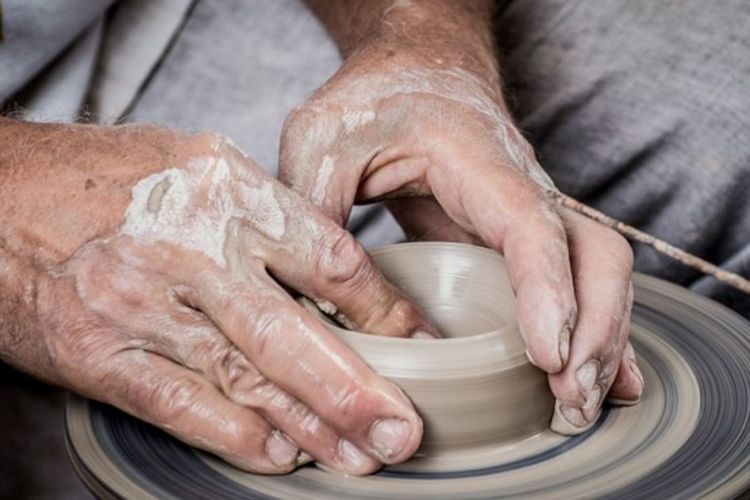
Although potters usually had a thriving trade that provided essential goods, they held a low place in society. The potter was responsible for every step of making pottery, from collecting the clay to shaping the pots and firing them in his kiln.
Potters made a wide variety of vessels used for carrying, storing, cooking, and serving food, liquids, grain, and even for carrying hot coals. They also made clay tablets, ovens, drainage pipes, and lamps. Pots were sometimes glazed, polished, or given decorative finishes or details.
Tentmakers:

Tents were widely used, not only during the nomadic Patriarchal and Mosaic periods, but at all times by travelers, soldiers, and during the annual pilgrimages.
These tents, made of goatskin, usually had a few rooms, with sides that could be opened to let in air. This heavy and coarse fabric, also known as sackcloth, shrank after the first rains, making it waterproof and windproof. The apostle Paul, who worked as a tentmaker came from the province of Cilicia, an area known for its goatskin cloth.
A busy and diverse place.
As we have seen, the market place in biblical times was definitely a busy, diverse, and important place. Most goods were sold from its storefronts or small stalls. And most service-related occupations were also carried out there. It was a place to buy needed items, find a job, or even get a haircut!
Images from FreeBibleImages.org: Marketplace by www.LumoProject.com | Basket by Padfield.com | House by Good News Productions Int/College Press Publ | Carpenter by David Padfield | Money by www.LumoProject.com | Tent by FreeBibleImages.org / Other images: Hyssop | Glass vase by Luis Garcia | Potter's wheel.



![Don't you Know You Are Beautiful? [Video]](https://signorasheila.blog/wp-content/uploads/2018/02/beautiful-woman-painting-1.jpg?w=750)
 Signora Sheila
One response to “Bible Occupations: The Marketplace”
[…] we see from today’s post and from Bible Occupations: The Market Place, the ancient marketplace was very much a hub of Jewish society. That it played an important role in […]
LikeLike