
My brothers had an estate sale at my parents’ house this week, which brought sadness to my heart. Few of my childhood memories are tied to this house because my parents didn’t live there when I was growing up. But it still held a big piece of my heart.
Dad died of heart problems in 2021 just shy of his 86th birthday. Stupid pandemic restrictions were still in place. He died all alone in a nursing home, which still breaks my heart.
Mom left us in February of this year, shortly after her 86th birthday. Thankfully, she died at home surrounded by her loved ones. I’m still processing the loss, not being able to attend her funeral, and the fact that I’m an “orphan. I feel family-less, living so far away from them all, and regret not being able to be there in their time of need.
Death Cleaning
So with both parents gone, my brothers have been “death cleaning.” It hasn’t been easy, especially for my youngest brother who lived there. They called in an estate sale agent, which alleviated a lot of the work and hopefully some of the emotional stress.
People, mostly women, have been “death cleaning” for centuries. Since the beginning of time, really. We’ve probably just never thought of it as such. Despite its morbid name, it’s really just the process of cleaning up after the death of a loved one.
Death cleaning is a burden to those left behind. What to do with all that stuff? How to deal with the memories, the painful emotions. That is why I think “Swedish Death Cleaning,” which I have just discovered, is such a good idea.
Swedish Death Cleaning
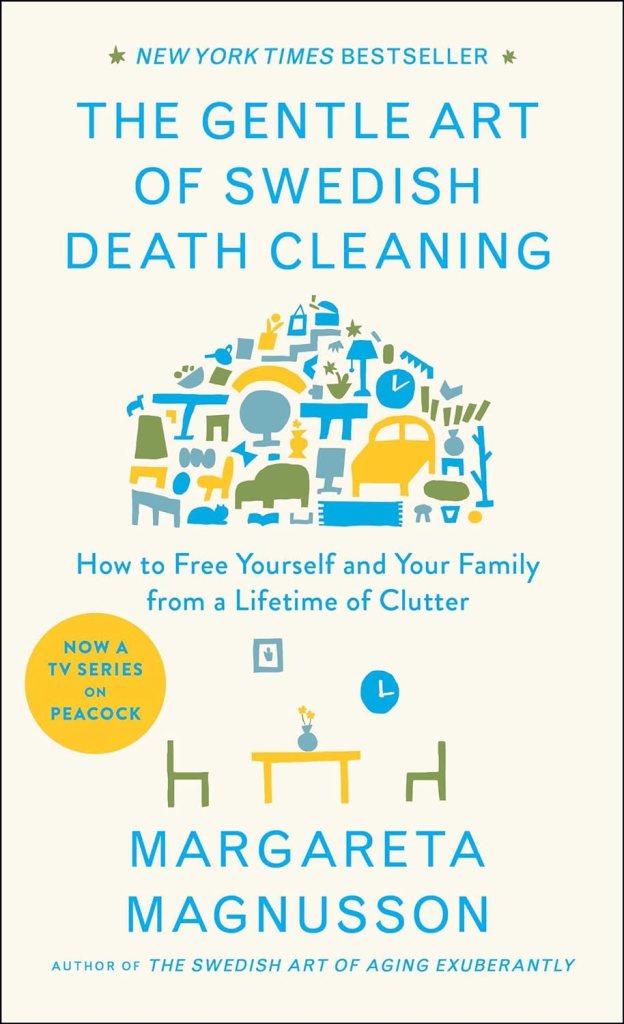
This philosophy started in 2017 with Margareta Magnusson’s book, “The Gentle Art of Swedish Death Cleaning.” The book is basically a guide on how to free yourself and your family from a lifetime of clutter.
I have only read a preview of the book here. But I’ve done a lot of reading on the subject. I see it as a sensible idea and a considerate way to show your people that you love them.
Swedish Death Cleaning should really be called Life Cleaning because it encourages you to deal with your belongings while you’re alive, so that your loved ones don’t have to do it after you’re gone.
It’s really a kindness to them because they don’t have to go through all of your life’s hoarding on top of dealing with the emotional turmoil of funerals and documents.
I’m sure my brothers wish my parents had known about this process. Then they wouldn’t have been faced with the dilemma of cleaning out all the excessive stuff a hoarder (my mom) left behind.
But Swedish Death Cleaning is also a kindness to yourself because less clutter and work will make your life, especially your older years, much easier.
I’ve written before about decluttering and preparing for retirement. Excess creates complications. Decluttering helps because less makes good sense. And in the end, less often turns out to be more.
So what does Swedish Death Cleaning involve? Based on my reading, and things I’ve discovered over the years and through over 50 moves, I’ve broken decluttering or death cleaning down into 11 basic steps.

How to Death Clean
1. Buy less.
If you’re decluttering, it’s because you realize you have too much stuff. So why buy more? Why fill your cluttered home, closets, and cupboards with more stuff? Focus on what you have and get rid of the excess – without buying more!
2. Discuss it with loved ones.
Let loved ones know what you’re doing and why. This way they can support your efforts and maybe even help. You might even offer to let them choose special mementos that you’re ready to part with.
3. Do a quick pick up of your house.
Depending on how much stuff you have, this process can take days or weeks. So start each day by getting dressed, making the beds, and washing the dishes. Put misplaced items where they belong. Throw out any trash: paper, bottles, etc. This will make your house will look so much better right away. And you’ll be more motivated to keep going!
4. Sort into categories: discard, sell, donate, and keep.
As you declutter, sort things into these categories, with an extra “wait and see” box, if needed. Throw away trash and damaged items. Get rid of things you don’t use, don’t like, or that don’t fit your lifestyle. And whatever you do, don’t add them to any piles you might already have in the garage, attic, or other storage areas!
5. Declutter your closet first.
Organizing your wardrobe will boost your confidence and make it easier to get ready in the morning. Take your time and make logical, not sentimental, decisions. Sentiment makes us hold on to things we loved, even if they no longer fit. What we need is a workable wardrobe, not a closet full of things we can’t or will never wear. If you have a lot of clothes, start by sorting through the current season’s items. Do the rest when you have time.
6. Do one room/area at a time.
Start with the main living areas, because comfortable and organized spaces for relaxing and entertaining will encourage you to keep going! And inspire you to have people over more often!
7. Declutter household items by size.
Start with furniture and large things that take up the most space and work your way down. Set aside paperwork, photos, and emotionally charged mementos and sort them last. They tend to take more time and require more difficult decisions.
8. Childrens’ rooms
This step is for those who begin the death cleaning process while the children are still at home. It’s never too early to start! Start by getting rid of broken toys, crayons, markers, and things they’ve outgrown. Help them determine which toys they actually play with, and teach them the joy of giving their things to children who may need them.
Remember that your children may find it difficult to let go of their belongings. Let them keep their most prized possessions, with a limit on the number if necessary. Ease the emotional turmoil of letting go by framing their favorite artwork and best school papers to decorate their rooms. Take photos of their more precious items as a remembrance.
9. Next clean your attic and garage
Go through your extra storage areas and get rid of things you never use, like unused paint, exercise equipment, or camping gear. Someone else might enjoy these items! Sort through seasonal and holiday items and see where you can simplify.
10. Lastly, sort paperwork, photos, and personal mementos
First of all, this is a good time to make your will. Then put it, along with your important documents and passwords, in a safe place where your family can easily access them after you’re gone.
Consider scanning or digitizing your less important photos. That way, you can keep the memories while eliminating bulky photo albums. You can do the same with some of your paperwork and receipts. Just remember to always keep backups!
11. And finally, never stop!
Decluttering is not a one-time event. Stuff finds its way into our homes somehow. We buy it, people give it to us. Then it wears out or outlives its usefulness to us. So keep decluttering all the time. It’s really the only way to keep our homes always neat and tidy!
More reading:
- The Golden Rule of Simplifying
- The Benefits of Italian Slow Living
- Simple Living for Retirement
- Cultivating Contentment in a World of Stuff
- Why I Choose Simple Living
- Spring Cleaning? Time to Declutter!
- My ABC’s of Simple Natural Living
- Slow Living in Christ?
- Swedish Death Cleaning
📷 Image credits: rummage sale; sorting boxes; book cover used under fair use standards



![Don't you Know You Are Beautiful? [Video]](https://signorasheila.blog/wp-content/uploads/2018/02/beautiful-woman-painting-1.jpg?w=750)
 Signora Sheila
2 responses to “Swedish Death Cleaning”
VERY helpful suggestions, Sheila. I think we actually breathe easier when our spaces aren’t cluttered!
LikeLiked by 1 person
I agree, Nancy. As my mom got older she became a keeper/slash hoarder and her home bulged with stuff. Everytime I went there I felt suffocated! Thankfully, there was no pure trash like you see on hoarder shows, because my youngest brother who lived on the premises, helped keep it cleaned up. But to me, all that stuff was overwhelming! So here’s to a relaxed, orderly, and breathable Christmas this year, lol!!
LikeLiked by 1 person